Construction Equipment in Russia: Rentals, New-Tech Reviews, From Foundation to Roof and Design Support
This article gives a practical, Russia-focused guide to construction equipment across the full building lifecycle: rental vs purchase, equipment selection for each work stage (foundation → roof), new-product and technology trends, maintenance and winterization, rental contracting, safety and regulation, logistics, and how design/BIM ties into machine choice.
—
Market overview (Russia) — key points
— The Russian market mixes Western brands (Liebherr, Volvo, Caterpillar — availability and service affected by recent sanctions), strong Chinese suppliers (XCMG, Sany, Zoomlion, SDLG) and domestic heavy-equipment or retrofit specialists.
— Large projects and urban works favor new or well-serviced equipment; regional and short projects often rely on rentals and used machines.
— Seasonal constraints (long winters in many regions, permafrost in the north) strongly influence machine choice, fuel, and maintenance planning.
— Telematics, 3D machine control and BIM adoption are accelerating in major contractors and urban developers.
—
Buy vs rent — decision factors for Russian projects
Consider these when choosing ownership model:
— Project duration and utilization rate (rent if <12–18 months or low utilization).
— Cash flow, financing costs and residual value uncertainty (used equipment market can be volatile).
— Availability of spare parts and manufacturer support (sanctions/import delays may favor rentals with supplier support).
— Need for specialized machines (pile drivers, crawler cranes) — usually rented.
— Maintenance capacity and certified technicians on staff — if lacking, renting can transfer risk.
— Seasonality — winter equipment storage and upkeep costs may favor rentals.
Quick rule: short-term/one-off and specialized machines = rent; long-term, high-utilization basic fleet (dump trucks, dozers, loaders) = consider purchase if service network is secured.
—
Equipment by construction phase (practical selection tips)
1) Site preparation & earthworks
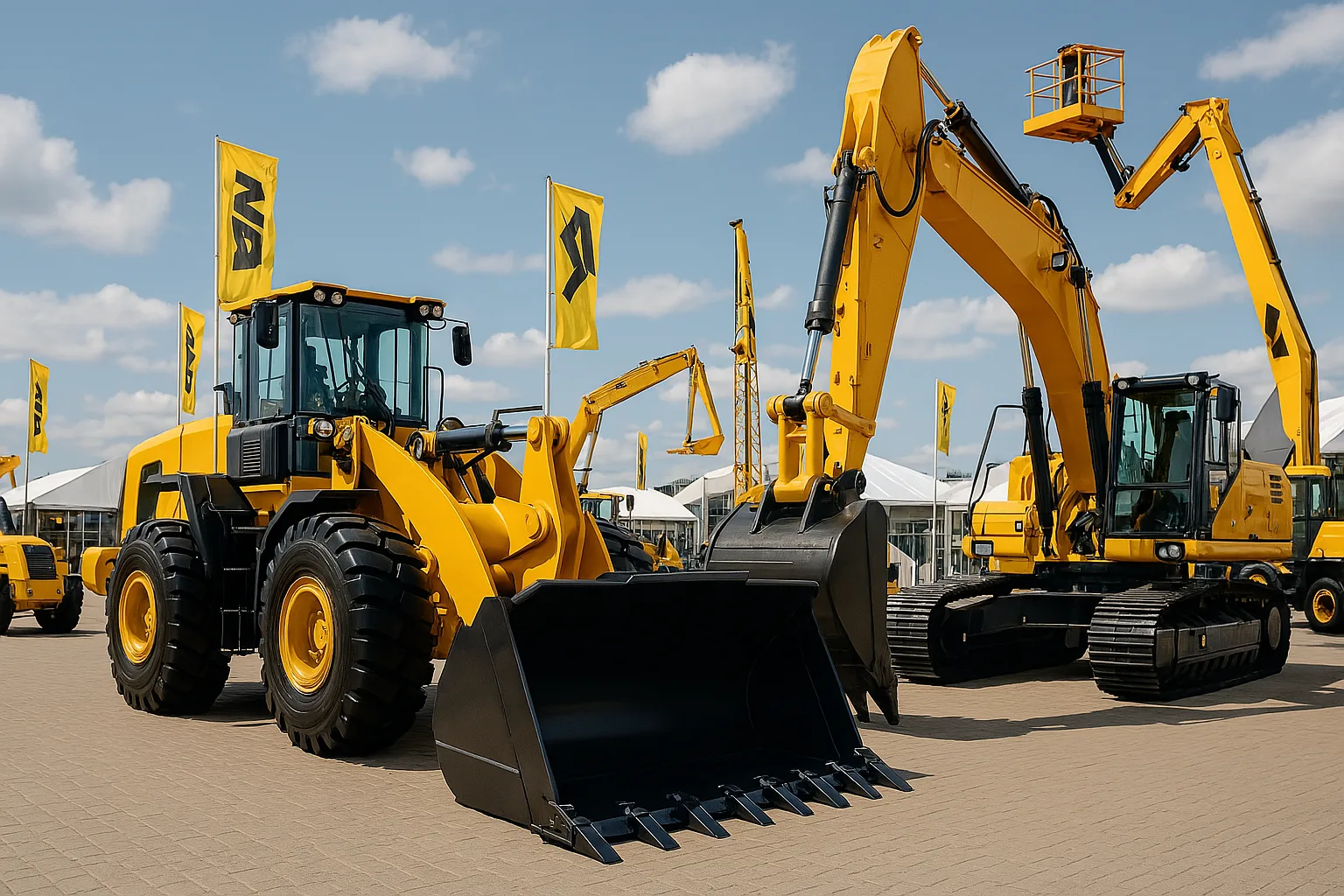
— Typical machines: excavators (mini, midi, tracked), bulldozers, wheel loaders, graders, soil compactors, dump trucks.
— Russian considerations: choose machines with cold-start packages, fuel pre-heating, and appropriate hydraulic oil grades. For swampy/freeze-thaw soils, use low-ground-pressure tracks or wide tracks.
— For northern/permafrost zones: limit surface disturbance, prefer low-vibration methods, and consult geotechnical engineers before heavy compaction.
2) Foundations & deep foundations
— Typical machines: piling rigs (diesel and hydromill), rotary rigs, CFA rigs, drilling rigs, cranes for driven piles, vibratory hammers, rock breakers.
— Popular foundation types in Russia: bored piles, driven piles, screw (helical) piles for smaller structures, shallow frost-protected foundations where geotech allows.
— Tip: For clay/frozen ground, use heated drilling fluids and winterized drilling setups. In remote regions, favor rigs with reliable local serviceability and interchangeable tooling.
3) Concrete & structure
— Typical equipment: concrete pumps (truck/boom), transit mixers, pumps for grout/injection, tower and mobile cranes, telehandlers.
— Tower cranes require strict permitting and foundation planning; consider wind loads and snow accumulation in design.
— Concrete curing in winter: heated enclosures, admixtures for frost protection, and insulated formwork.
4) Roofing, façade and finishing
— Access and lifting: mobile cranes, boom lifts, scissors, façade rigs, material hoists.
— For cold-climate roofing: use heated work platforms and ensure membranes and adhesives are suitable for low temperatures.
— Scaffolding systems must comply with Russian safety standards and be plan-coordinated with crane lifts.
5) MEP installation & interiors
— Small lifts, mini-excavators for trenching, compact loaders, vacuum trucks for sewer works, and dedicated lifts for HVAC units.
— Attention to floor-load limits in older buildings when lifting heavy equipment indoors.
—
New product trends & brief reviews (what to watch in 2024–2026)
— Electrification: compact and mini electric excavators and electric telehandlers are gaining traction for urban jobs thanks to lower noise and emissions. Leading OEMs (Volvo, JCB, Komatsu) and Chinese makers are expanding EV models. Evaluate battery runtime under site conditions and charging logistics.
— Hybrid and fuel-saving tech: excavators and loaders with hybrid hydraulics reduce fuel consumption on cyclical jobs. Good where diesel supply/cost is a concern.
— Telematics & 3D machine control: Trimble, Topcon, Leica solutions and integrated OEM systems improve grading accuracy and reduce rework. Top contractors in Russia increasingly demand machine-control-ready rigs.
— Chinese OEM quality leap: XCMG, Sany, Zoomlion offer competitive pricing and growing spare-part networks — good alternatives if Western support is limited. Vet dealers for long-term parts availability.
— Autonomous and assisted features: semi-autonomous grading and digging help on repetitive earthworks; expect more uptake on large site projects.
When evaluating a new model:
— Confirm winterization package (cold start, heaters, fuel preheat).