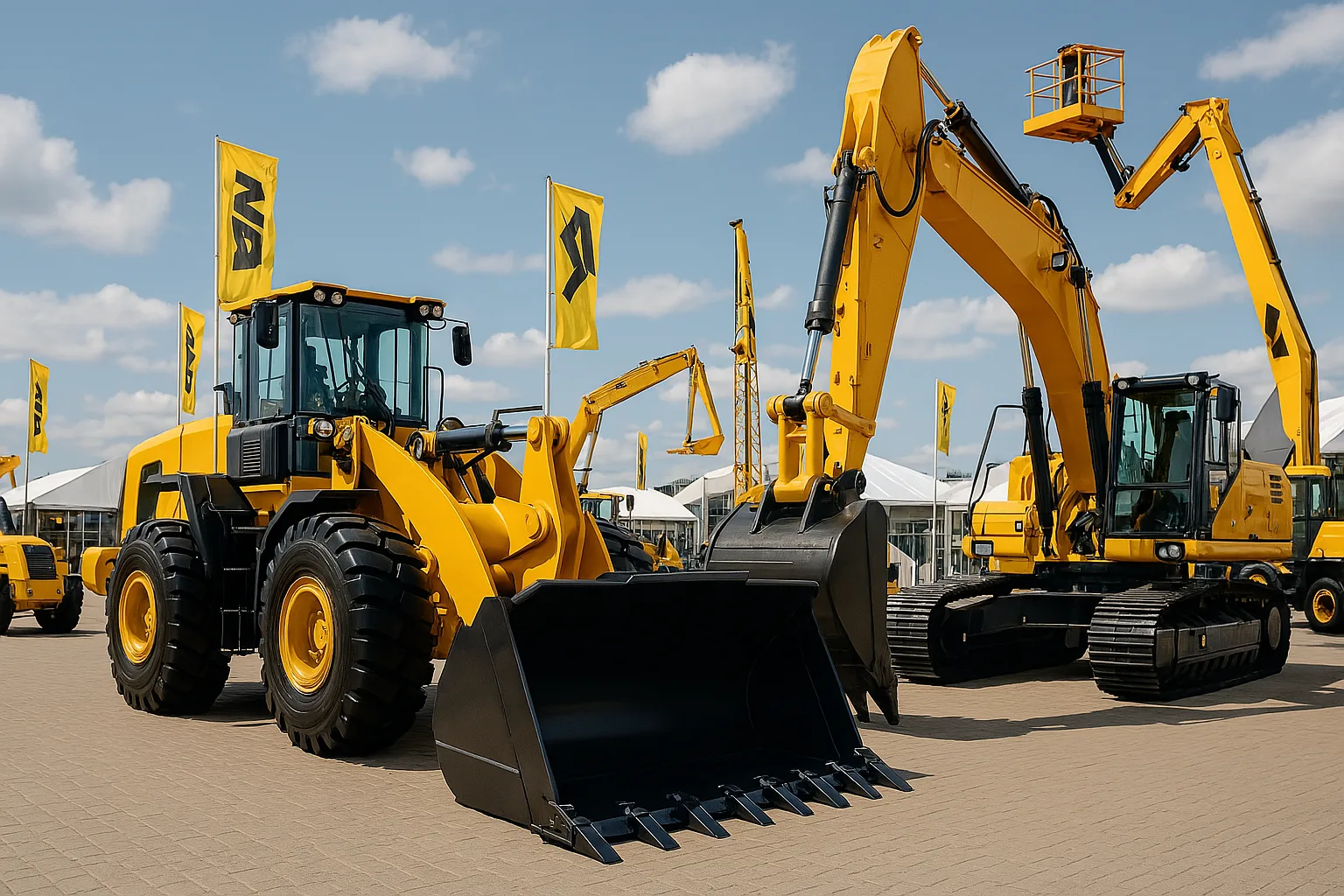
Overview
Construction in Russia presents unique challenges and opportunities: extreme climates, long transport distances, a mix of multinational and domestic suppliers, and evolving regulatory and digital-design practices. This article covers equipment rentals, new-product trends, practical reviews, step-by-step equipment applications from foundation to roof, and design/operational guidance tailored to the Russian market.
Rental Market in Russia — What to Know
— Short-term vs long-term: short-term for seasonal peaks and specialized tasks; long-term (multi-month leases) often cheaper per month but require careful maintenance clauses.
— Local rental hubs: major cities (Moscow, St. Petersburg, Yekaterinburg, Novosibirsk) offer largest fleets; remote regions rely on local suppliers or equipment transport.
— Key rental categories: excavators, wheel/loaders, bulldozers, rollers, mobile cranes, tower cranes (on projects), concrete pumps, mixer trucks, telehandlers, aerial platforms, compactors, mini-loaders.
— Contract essentials: hourly/daily rates vs monthly; fuel and consumables policy; transport/delivery charges; liability and insurance; damage/wear definitions; operator provision (owner-operated vs customer-operated).
— Documentation to request: service history, hour-meter readings, safety inspection certificates, photographs of wear areas, telematics access if available.
Buying vs Renting — Decision Factors
— Project duration and frequency of use: buy if utilization > 60–70% of working time on long-term pipelines/projects.
— Capital and financing: leasing options, including operational (rent-like) or financial (ownership at term end).
— Maintenance capacity and spare parts: if you have workshop capability and steady projects, ownership can lower total cost. If not, rental with service included reduces risk.
— Resale and depreciation: consider resale market in Russia; equipment with good parts availability retains value.
New-Product Trends & How to Review Them
Trends to watch and criteria for evaluation in Russia:
— Electrification & hybrid drives: battery-electric and hybrid machines reduce local emissions and operating noise but require charging infrastructure and cold-weather performance validation.
— Telematics & remote diagnostics: look for stable cellular/satellite connectivity and Russian-language support. Telematics aids fuel monitoring and theft prevention.
— Operator comfort & safety upgrades: heated cabs, climate systems rated for -40°C, joined safety packages (cameras, load-limiting devices).
— Versatility of attachments: one platform serving multiple attachments reduces fleet size.
— Localization & spare parts availability: crucial — prefer models with established parts networks in Russia or strong local dealer support.
Review checklist:
— Fuel efficiency and cold-start behavior
— Availability of winterization kits and certified heaters
— Spare parts lead times in Russia
— After-sales & warranty conditions in-country
— Telematics usability and data export options
— Ease of servicing (common tools, filter placement, access panels)
Foundation-to-Roof Equipment Workflow (Practical Applications)
A practical walk-through showing common equipment and tips for Russian conditions.
1. Site Preparation & Earthworks
— Equipment: dozers, excavators (standard and long-reach), compact loaders, graders.
— Tips: plan haul roads with frost heave in mind; use geotextile under temporary roads in thaw season; schedule heavy earthwork during frozen ground where possible to reduce rutting.
2. Excavation & Foundation
— Equipment: mid/large excavators, backhoes, trenchers, piling rigs (vibratory/rotary), sheet-pile drivers.
— Tips: for permafrost and seasonally frozen soils follow geotechnical recommendations; protect pile heads from ice; use winterized hydraulic fluids.
3. Compaction & Subgrade
— Equipment: vibratory rollers, plate compactors, rammers.
— Tips: monitor moisture and temperature; compaction cycles must account for freeze-thaw; document density tests for regulatory compliance.
4. Concrete Works
— Equipment: concrete mixers, mobile pumps, stationary pumps, screeds, vibrators.
— Tips: use antifreeze admixtures and insulated formwork in cold weather; heated enclosures or concrete blankets for curing; mobile concrete plants may be favored in remote sites.
5. Lifting & Placement
— Equipment: mobile cranes, tower cranes, telehandlers, forklifts.
— Tips: ensure operator certification and crane certification per Russian rules; create lift plans and account for snow/ice on loads and booms.
6. Structural Works & Envelope
— Equipment: aerial platforms, scaffolding systems, compact loaders, mini-excavators for tight spaces.
— Tips: select scaffolding and platforms rated for local wind/snow loads; pre-insulate facade systems to speed installation during cold months.
7. Roofing & Finishing
— Equipment: roofing lifts, nailers, power tools, portable generators, mini-cranes for roof materials.
— Tips: choose materials and adhesives certified for low temperatures; schedule membrane welding on warmer days or use heated workplaces.
8. Site Utilities & Support
— Equipment: generators, heaters, water pumps, temporary lighting, dust suppression rigs.
— Tips: diesel anti-gel treatment and reliable heating systems are essential for winter operations.
Design Assistance & Digital Integration
— BIM and equipment planning: integrate heavy