Overview
This guide covers construction equipment for the Russian market: rental best practices, how to evaluate new products, equipment applications from foundation through roof, site design assistance, maintenance, procurement and finance considerations, plus safety and regulatory notes specific to Russia.
Market snapshot (Russia)
— Both global manufacturers (Liebherr, Caterpillar, Komatsu, Volvo, JCB, etc.) and domestic producers supply equipment.
— Demand centers: Moscow and St. Petersburg regions drive higher rental and purchase activity; regional markets vary widely in price and availability.
— Key considerations for the Russian context: spare-parts availability, service network density, and logistics across vast distances — especially for remote projects and harsh-climate sites.
How to approach rentals vs purchase
— Short-term needs and fluctuating workloads → rent.
— Long-term, continuous use with predictable duty cycles → buy or lease.
— Hybrid: long-term lease with maintenance included reduces CAPEX and technical risk.
— Compare total cost of ownership (TCO) with rental rates, accounting for: depreciation, insurance, transport, operator training, and downtime risk.
Renting: practical checklist
— Verify ownership and registration papers; confirm equipment meets Russian technical inspection and operating documentation.
— Check operator certification and training; ensure offered operator is experienced on the exact machine model.
— Inspect machine condition: hour meter, hydraulic leak test, undercarriage/tracks, tires, attachments. Photograph pre-handover condition.
— Clarify delivery/return terms, transport costs, fuel policy, and liability for damage.
— Contract items: rental period, penalties, maintenance responsibilities, spare-parts availability, insurance, emergency support/response time.
How to review a new product (framework)
When evaluating a new piece of equipment, use a consistent checklist:
— Performance: rated power, torque, cycle times, bucket/capacity or lifting chart.
— Fuel efficiency and emissions: consumption per operational hour; compliance with emissions norms.
— Telematics and connectivity: remote diagnostics, GPS, operating hours logging.
— Maintainability: ease of access to filters, fluid points, common service parts.
— Parts & service network: availability of spare parts in Russia and expected lead times.
— Operator comfort and safety: cab ergonomics, visibility, climate control (important for Russian winters).
— Total cost: purchase price, expected maintenance, resale value, warranty.
— Field test: job-specific trial under representative loads and cycles.
Equipment by construction phase
— Foundation and earthworks
— Typical machines: hydraulic excavators (mini, midi, full-size), bulldozers, wheel and tracked loaders, backhoes, trenchers, compactors, vibratory rollers, piling rigs, drilling rigs (rotary, CFA), grout pumps.
— Important specs: bucket sizes, digging depth, boom reach, stability for piling, compaction force and amplitude for rollers.
— Russian considerations: frost conditions require frost-protection of hydraulics and engine pre-heaters; piling rigs must be rated for local geotechnical conditions.
— Concrete works and structure
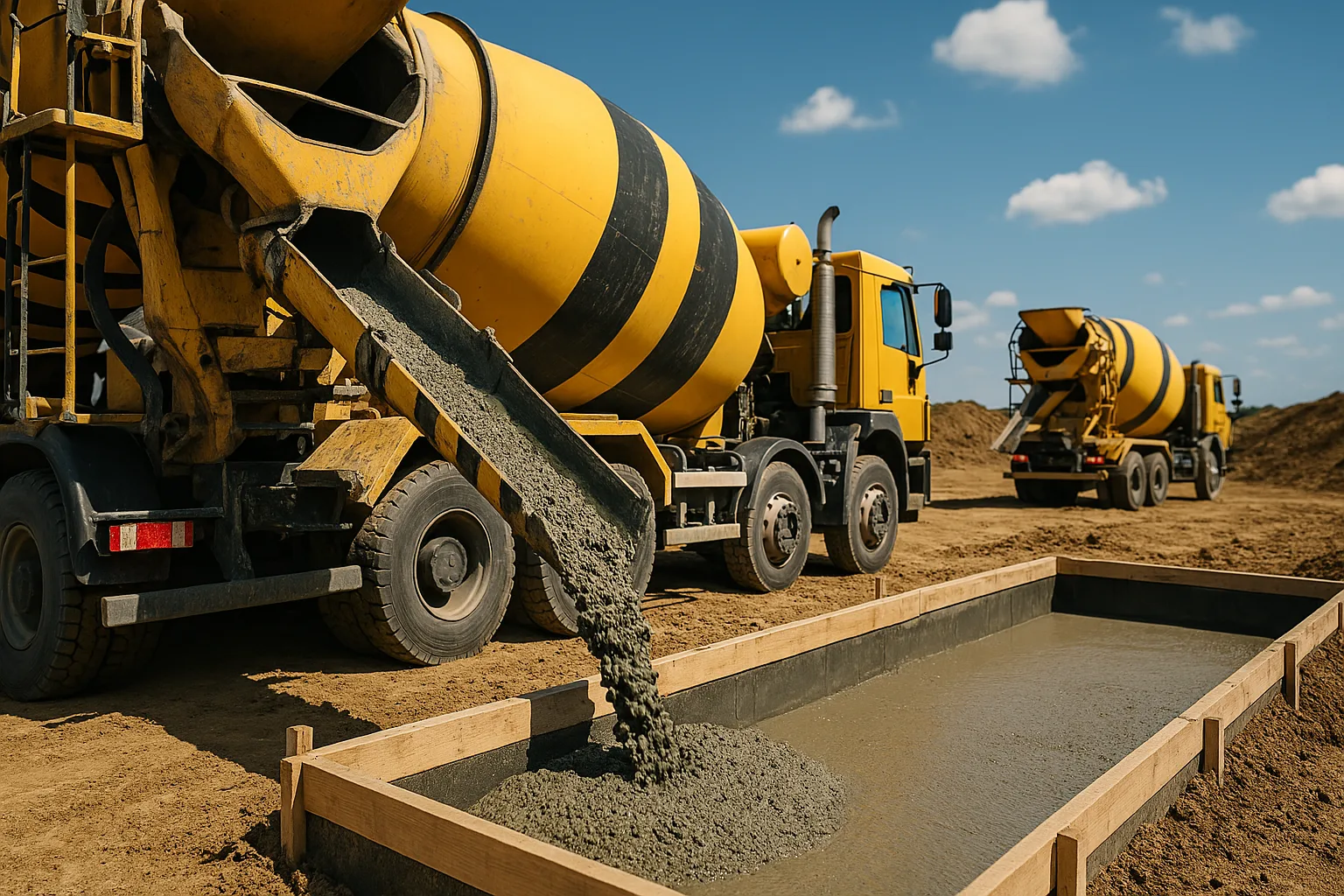
— Typical machines: concrete mixers (truck & stationary), boom and line concrete pumps, batching plants, tower cranes, mobile cranes, telehandlers, vibrators, rebar benders/cutters.
— Considerations: pumping distances and heights, batch consistency in cold weather (anti-freeze admixtures, heated plants), crane capacity charts with wind and snow load factors.
— Roofing and exterior work
— Typical machines: mobile elevating work platforms (MEWPs), telescopic booms, scissor lifts, mini-cranes, roof hoists.
— Considerations: access zones, load-bearing on temporary roofing, fall protection systems suitable for icy surfaces.
— Finishing and interiors
— Typical tools: compact loaders, electric lifts, scaffold systems, floor grinders, plastering machines, small power tools, material hoists.
— Consider ergonomics and dust control for worker health.
Site design assistance and planning (from foundation to roof)
— Early-stage equipment planning: integrate equipment selection in tender and design phase to optimize foundation method, access roads, material staging, and crane locations.
— Use BIM and site logistics modeling to:
— Simulate crane lifts and reach envelopes.
— Plan material delivery sequences and laydown areas.
— Identify temporary works and traffic flows.
— Factor seasonal changes: winterization needs, thaw periods, river/road restrictions during spring melt (rasputitsa).
Maintenance, spare parts, and local service
— Preferred approaches: preventive maintenance schedules, remote monitoring (telematics), onsite spare parts kits for critical wear items.
— Assess local dealer/service network before procurement — long lead times for imported parts can stop projects.
— Consider stocking critical consumables (filters, belts, hoses) for remote projects.
Safety and regulatory compliance (Russia)
— Comply with